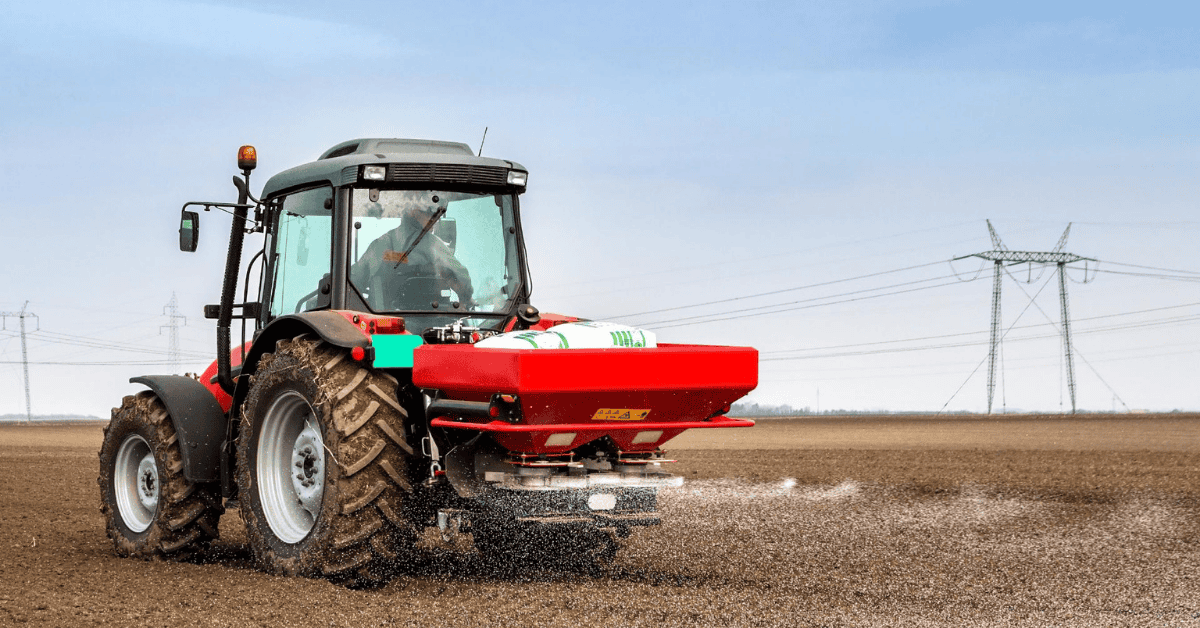
As local farmers enter the busy Spring planting season, many are facing significant challenges due to the ongoing escalation in the Middle East, particularly concerning the availability of fertilizer and diesel fuel. These two essential resources have seen major disruptions, deeply affecting the agricultural sector.
Rising Fertilizer Prices and Supply Concerns
Since the escalation of the Iran conflict, nitrogen fertilizer prices have surged by over 30%, with much of this product passing through the Strait of Hormuz, a key shipping route.
Steve Meredith, a farmer from White Mills in Hardin County, shared his concerns: “The Secretary of Agriculture says 75% of farmers already purchased their fertilizer; that still leaves 25% unpurchased,” he said. “And just because you bought it, doesn’t mean you’ll be able to get it.
So much of that inventory is on ships right now, not moving. It’s going to be serious concerns, especially nitrogen, which is an energy-dependent fertilizer.”
The supply chain disruption is causing anxiety as farmers worry about whether they’ll receive the fertilizer in time for planting. According to the American Farm Bureau Federation, a significant portion of U.S. farmers had preordered fertilizer for the 2026 planting season: 67% of the Midwest, 31% of the Western U.S., 30% of the Northeast, and 19% of the Southern U.S. had secured their supplies.
Challenges Faced by Farmers
Meredith, now in his 43rd crop season, noted that local farmers are already contending with a persistent drought, tariff issues impacting fertilizer sales from Canada, and the strain of high commodity prices. “Agriculture is very efficient, but there are only so many corners you can cut,” Meredith remarked.
With the added uncertainty of fertilizer supply, farmers in the region are being forced to adapt to an increasingly volatile environment.
“Farmer Steve”: A Voice for Agricultural Education
Known as ‘Farmer Steve’ to thousands of kids across Kentucky and Southern Indiana, Meredith has made a name for himself not just as a farmer, but as an educator. When he’s not on his farm, Meredith travels to schools and events with his farm animals, teaching children about farm life and the vital role agriculture plays in their daily lives.
As Kentucky’s farmers navigate the hurdles of this planting season, they remain hopeful for solutions to the challenges posed by the global political landscape and ongoing supply chain issues. The region’s farmers continue to be a cornerstone of local food production and education, despite these significant obstacles.