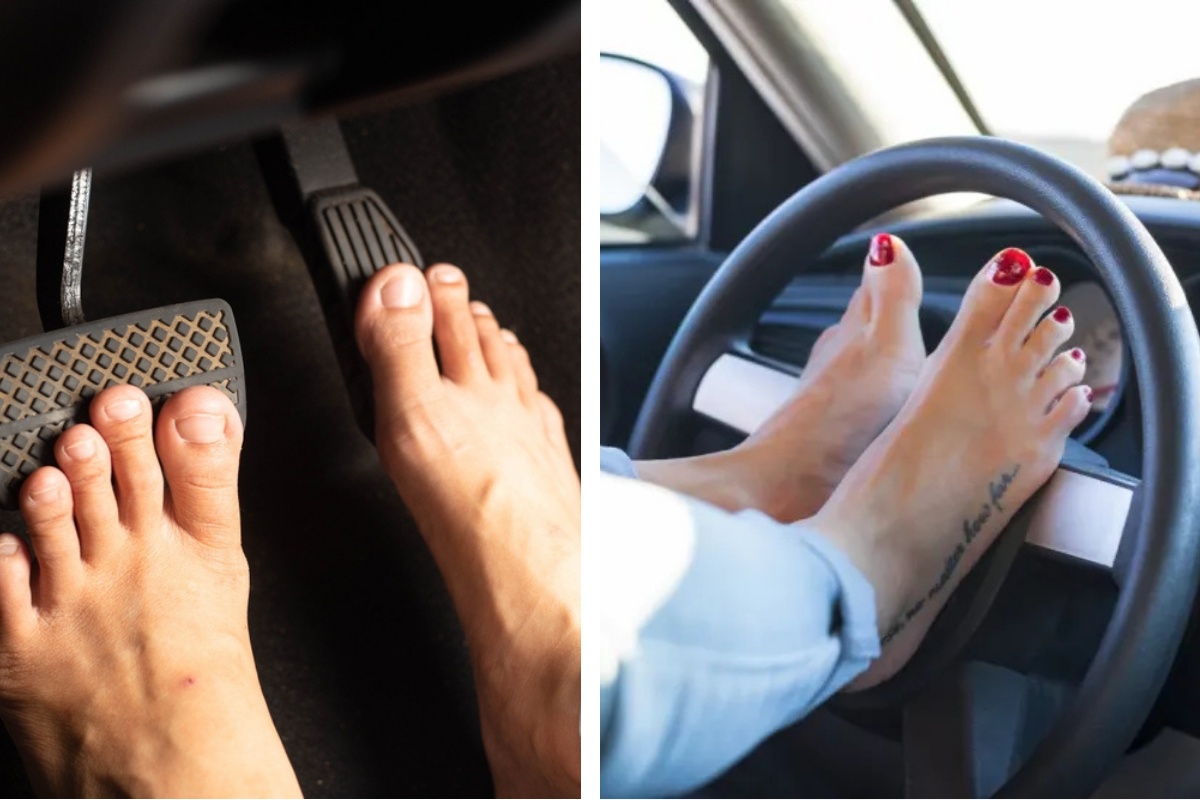
No, it is not illegal to drive barefoot in California. The California Vehicle Code contains no provisions requiring footwear, confirming this common myth as unfounded.
The Legal Reality
California law explicitly avoids mandating shoes for drivers. The California Vehicle Code (CVC), which governs traffic rules, does not mention barefoot driving or any footwear requirements.
The California Highway Patrol (CHP) and Department of Motor Vehicles (DMV) driver handbooks reinforce this: no state or federal prohibition exists. Police cannot pull you over solely for being shoeless, as confirmed by CHP statements debunking the rumor.
This legality holds nationwide, but California’s focus remains on safe vehicle control under CVC Section 23103, which targets reckless disregard for safety—not attire. As long as barefoot operation does not impair control, no ticket applies.
Origins of the Myth
The barefoot driving ban persists due to urban legends and outdated assumptions. Many believe hot California weather prompts stricter rules, but no such statutes exist. Misinformation spreads via word-of-mouth, with some confusing it for commercial trucking regs or motorcycle rules (e.g., Alabama bans barefoot motorcycling). CHP has repeatedly clarified via social media and interviews that it’s a misconception.
Historical notes, like a 2002 LA Times query, show the myth dates back decades, yet CHP consistently affirms legality while urging caution. Social media amplifies it annually, but official sources like DMV handbooks omit any footwear mention.
Safety Concerns
While legal, driving barefoot carries risks that could indirectly lead to trouble. Sweaty feet may slip on pedals, delaying braking or acceleration—especially critical in emergencies. Bare skin heightens injury odds from pedal jams, glass shards post-crash, or hot surfaces.
CHP recommends shoes for grip and protection, noting barefoot drivers might struggle exiting wreckage quickly. Tests show reduced pedal feel without soles, mimicking hazards of flip-flops or heels. In wet or hot conditions, common in California, slippage worsens.
Liability in Accidents
Barefoot status won’t trigger a ticket but can factor into fault determinations. If proven to contribute (e.g., slipping caused a collision), courts may deem it negligent under CVC reckless driving laws. Insurers scrutinize it in claims; lack of shoes could raise premiums or deny coverage if linked to the crash.
Plaintiffs in lawsuits against barefoot drivers cite impaired control as evidence of negligence. No direct penalties exist, but combined with erratic driving, it strengthens cases for fines up to $1,000 or jail under CVC 23103. Always prioritize control to avoid such scrutiny.
Advice for Drivers
Opt for closed-toe, rubber-soled shoes for optimal pedal grip and safety. Test barefoot driving in a parking lot first to assess personal comfort and control. Commercial drivers face employer or federal rules (e.g., DOT may require boots), so check those.
In California’s diverse conditions—from coastal fog to inland heat—proper footwear enhances reaction times. If stopped, focus on safe behavior; officers prioritize violations like speeding over feet. Drive responsibly: legality doesn’t equal smart choice.
Sources
- (https://www.eastonlawoffices.com/blog/is-it-legal-to-drive-barefoot-in-california/)
- (https://www.maho-prentice.com/blog/is-it-illegal-to-drive-barefoot-in-california/)
- (https://www.kistlerlawfirm.com/is-it-illegal-to-drive-barefoot-in-ca/)