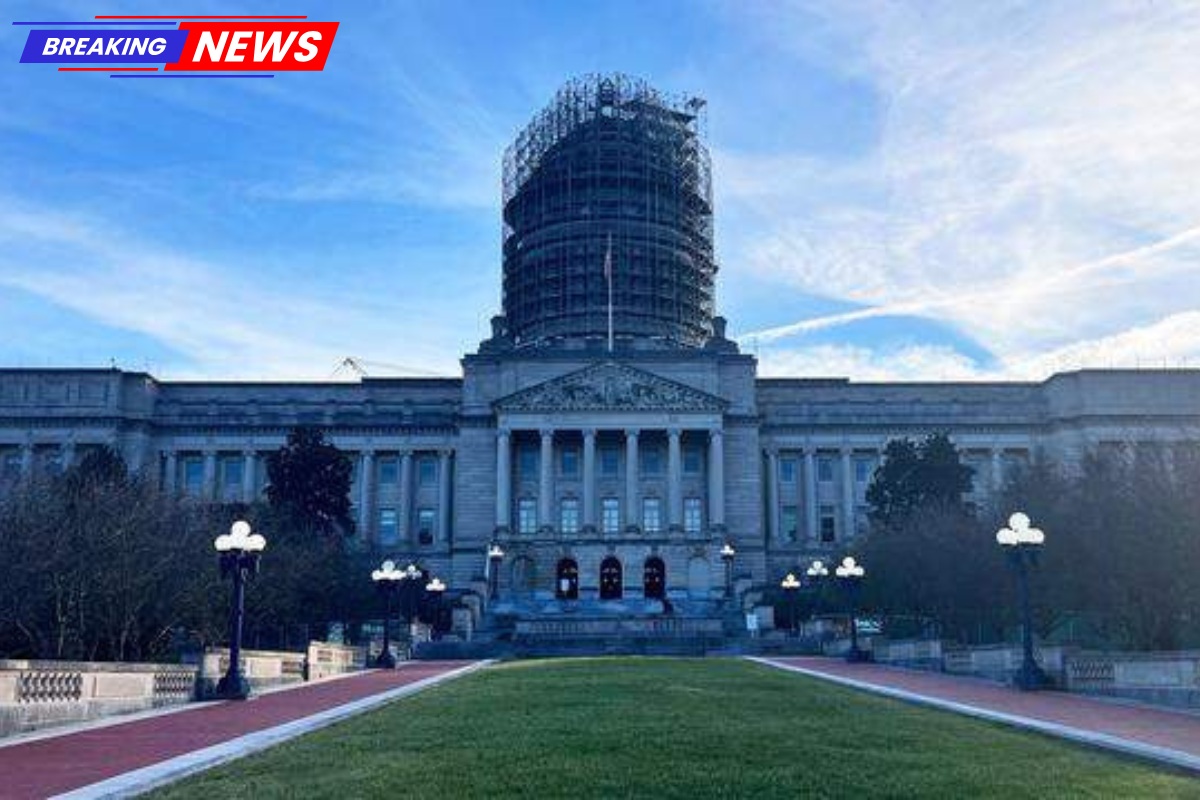
Kentucky’s House Bill 900 (HB 900) went through a dramatic transformation before landing on the governor’s desk. What began as a short, broad proposal quickly evolved into a detailed and controversial funding package. The process behind it has sparked debate about transparency, priorities, and how state money should be allocated.
From a Simple Proposal to a Massive Spending Plan
HB 900 started as a one-page bill in March, proposing about $800 million in spending. At that stage, it lacked specifics about where the money would go. Over time, lawmakers expanded and reshaped it significantly.
By early April, the bill had grown into a 58-page document outlining more than 300 projects across the state. Its total funding doubled to $1.7 billion, drawn from Kentucky’s Budget Reserve Trust Fund, often called the “Rainy Day Fund.”
This final version passed just hours before the deadline needed to override a potential veto, highlighting the urgency and complexity of the legislative process.
Key Allocations and Projects
The final bill includes funding for a wide range of initiatives, from infrastructure upgrades to economic development projects.
Here are a few notable examples:
| Project Location | Funding Amount | Purpose |
|---|---|---|
| Lexington | $20 million | Blue Grass Airport terminal expansion |
| Maysville | $18 million | New water treatment plant |
| Statewide | $37.5 million | Endowed Research Fund support |
| Various regions | Remaining funds | Over 300 infrastructure and development projects |
These investments aim to improve public facilities, support local economies, and strengthen long-term development across Kentucky.
How It Compares to Previous Spending
While $1.7 billion is a large figure, it is actually lower than the $2.7 billion allocated in a similar bill the previous year. Lawmakers anticipated tighter conditions this time, partly due to expected reductions in federal funding.
Republican leaders emphasized the need to balance spending with maintaining a healthy reserve fund, especially in uncertain economic conditions.
Debate Over Transparency and Process
One of the biggest controversies surrounding HB 900 is how it was developed and approved.
Democratic Concerns
Democratic lawmakers raised several issues:
- The initial version lacked detail, making it feel like a “blank check”
- Final documents were released very late, limiting review time
- Some legislators felt excluded from key discussions
They argued that the process did not reflect transparency or bipartisan collaboration. Concerns were also raised when the final bill was not immediately available to the public upon passage.
Republican Response
Republican leaders defended the process, saying:
- Budgeting is inherently complex and often finalized late
- Timing was not intentional but part of coordinating multiple bills
- Lawmakers had opportunities to discuss priorities beforehand
They stressed that balancing regional fairness and statewide impact requires compromise, and no single group gets everything it wants.
The Role of Compromise in Budgeting
Even senior lawmakers had to adjust expectations. For example, a proposal to invest $150 million in research infrastructure was scaled down to $37.5 million.
This illustrates a broader reality: budgeting involves constant negotiation. Lawmakers must weigh:
- Regional fairness
- Economic impact
- Available funds
- Future financial risks
In the end, decisions reflect a mix of priorities rather than any single vision.
Challenges in the Budget Process
The debate over HB 900 highlights deeper issues in how state budgets are created.
Structural Constraints
- Budgets depend on revenue projections and other legislation
- Bills must be finalized in a specific sequence
- Last-minute changes are often unavoidable
Process Limitations
- Large documents are difficult to review quickly
- Non-committee members may have limited input
- Increasing participation could slow decision-making
Some former lawmakers noted that while more transparency sounds ideal, it could also make the process more complicated and contentious.
Could the Process Be Improved?
There are a few ideas for improving future budget processes:
- Releasing draft reports earlier for review
- Increasing communication between parties
- Providing clearer initial proposals
However, each improvement comes with trade-offs. More time and input can lead to more disagreement and delays.
Kentucky’s HB 900 shows how quickly a bill can evolve and how complex state budgeting really is. What started as a simple proposal became a detailed $1.7 billion spending plan affecting hundreds of projects.
The debate around it is not just about money. It’s about trust, transparency, and how decisions are made. While Republicans argue the process reflects practical realities, Democrats see it as a missed opportunity for openness.
In the end, HB 900 highlights a familiar tension in government: balancing efficiency with inclusion. There’s no perfect system, but the conversation around this bill suggests many believe there’s still room for improvement.