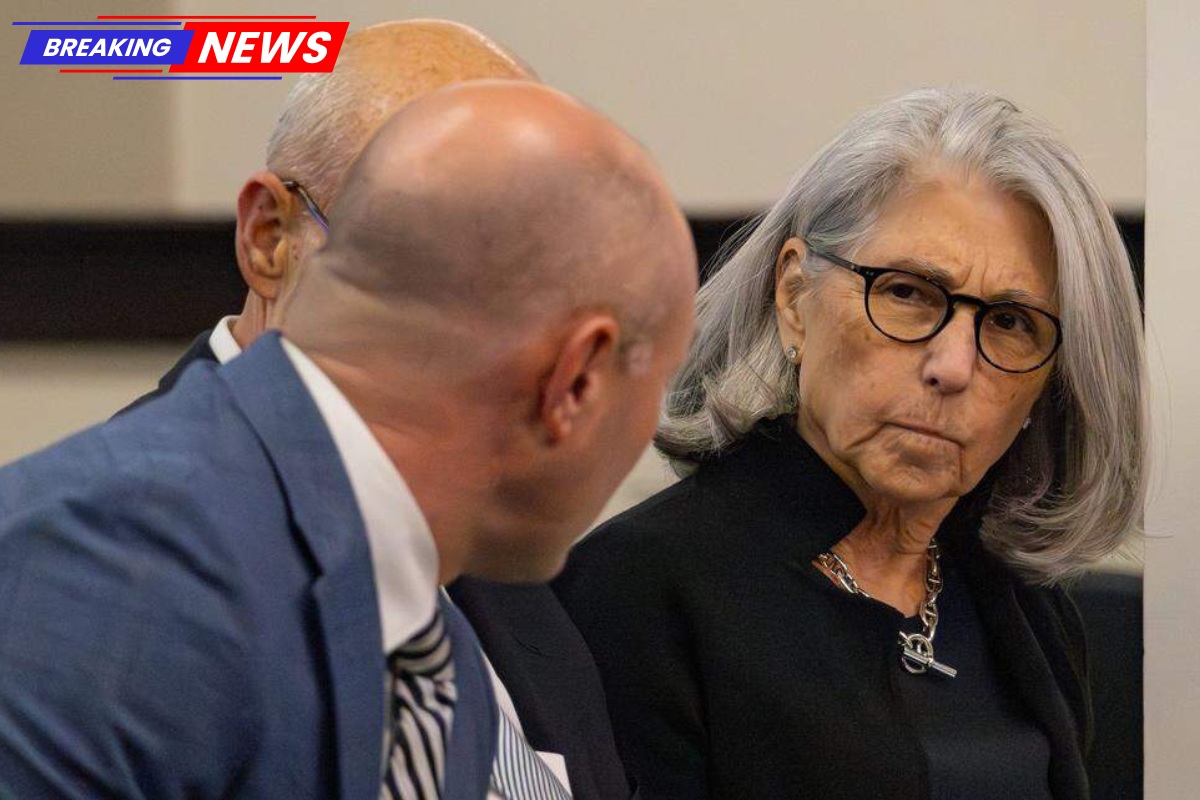
This week’s ruling from the Kentucky State Supreme Court to halt the impeachment proceedings against Fayette County Circuit Court Judge Julie Goodman has sparked further legal debates and raised significant questions about the separation of powers in the state.
Despite the Supreme Court’s decision, the Kentucky State Senate appears determined to continue with the impeachment trial, keeping the original timeline intact. The trial is set to begin on April 16, with the Senate planning to allow three days for the House prosecution to present its case, followed by three days for Goodman’s defense, and concluding with findings to be presented to the full Senate on April 24.
A Controversial Ruling and Continued Legal Tensions
Jonathan Miller, a political analyst with FOX 56 News, described the situation as “unprecedented,” noting that the legal battle has exposed a complicated relationship between the judiciary and the legislature in Kentucky.
Miller explained that while the Supreme Court’s ruling would typically be expected to have the final say on matters it rules upon, the legislature is challenging the Court’s involvement in its constitutional powers, particularly regarding impeachment.
“I think [the Court’s] strongest argument is that this is a matter for the judiciary. That the judiciary has systems on how to discipline attorneys and judges within it, and that they have the right under constitutional law to have the final say,” Miller said. “On the other hand, it is fairly clear in the Constitution that the legislature has the power to impeach.”
What Happened Before the Court Ruling
The Kentucky House of Representatives had passed articles of impeachment against Judge Goodman on March 20, alleging that she had committed misdemeanors in office that escalated into abuse of power and violations of binding precedents. These allegations were significant enough to prompt the impeachment process.
However, after the State Supreme Court’s ruling on April 6, the court found that the charges against Goodman did not meet the legal definition of a misdemeanor and that due process had not been afforded. This decision prompted many to believe the impeachment should be dropped.
The Senate’s Position and Plans
Despite the high court’s intervention, Senate President Robert Stivers issued a statement maintaining that the Senate would proceed with the trial. His remarks reflected a commitment to fulfilling the Senate’s constitutional duties, which include addressing concerns about judicial conduct.
“The Senate’s focus remains on carrying out its duties as outlined in the Constitution of Kentucky, that each branch of government operates with integrity and that concerns about judicial conduct can be raised and addressed without fear of retaliation,” Stivers said.
For now, the Senate’s plan is to continue with the impeachment trial, and Miller predicts that if the trial proceeds and Goodman is acquitted, the matter could be considered settled. However, if she is convicted, Miller suggests the case could move through further legal channels, potentially reaching the federal courts or even the U.S. Supreme Court.
Possible Outcomes and Legal Implications
As the Senate proceeds with its trial, the power struggle between the judicial and legislative branches of government could extend beyond Kentucky’s borders. If the Senate chooses to convict Goodman, it may spark a more complex legal battle that could ultimately reach the highest levels of the federal judiciary.
Miller noted that “If the trial happens and she’s acquitted, I imagine it will be all said and done. If the trial happens and she’s convicted, then I would imagine there would be further court adjudication, and conceivably we could see this go into the federal courts, into the U.S. Supreme Court, ultimately.”
Kentucky’s impeachment process for Judge Julie Goodman remains in flux, with the state’s legislature and judiciary at odds over the scope of each branch’s powers. As the Senate prepares to hold its trial in just a few days, the outcome could have lasting implications for the state’s legal framework and the relationship between the branches of government.
With a legal showdown potentially on the horizon, the situation is one to watch closely in the coming weeks.