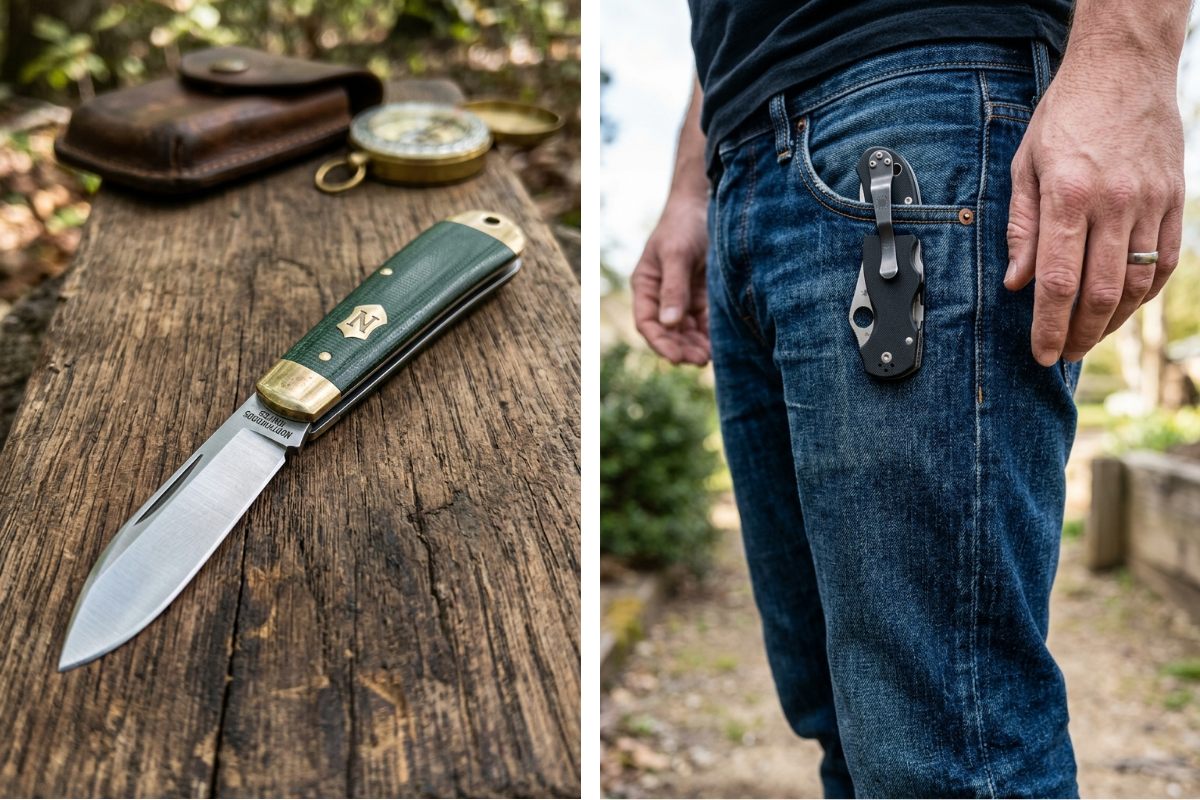
Connecticut knife laws balance public safety with personal rights, allowing ownership of most knives at home while imposing strict carry limits outside. Key statutes like § 53-206 and § 29-38 prohibit carrying certain blades, classifying violations as Class D felonies punishable by up to five years in prison and $5,000 fines. Blades over four inches (edged portion) or switchblades exceeding 1.5 inches trigger these rules, but exceptions exist for lawful activities.
Blade Length Restrictions
Connecticut measures the “edged portion” of blades, not total length, capping carry at under four inches for standard knives. Automatic knives (switchblades, out-the-front autos) face a tighter 1.5-inch limit—possession beyond home or vehicle is illegal unless exempted. Stilettos fall under the four-inch rule as “dangerous weapons.”
Ownership at home faces no bans; display, collection, or storage is unrestricted. Local ordinances may add rules, as no statewide preemption exists—check municipalities like Hartford for extras. Courts interpret “edged portion” as the sharpened side, creating gray areas for serrated or partially dulled blades.
Carry Laws: Open vs. Concealed
Neither open nor concealed carry alters legality—focus remains blade specs. § 53-206 bans qualifying knives “upon one’s person” outside home/business; § 29-38 mirrors this for vehicles. No holster or sheath exemptions; even pocket-clipped folders over limits violate if carried.
Everyday carry (EDC) folders under four inches work fine—leathermans, Swiss Army knives typically comply. Switchblades under 1.5 inches? Legal statewide. Balisongs (butterfly knives) aren’t explicitly banned but risk “dangerous weapon” catch-all if over limits or used threateningly.
Key Exceptions and Defenses
Statutes list affirmative defenses—prove them to avoid charges:
- Transporting for sale/display at gun/knife shows.
- Moving household goods between residences.
- Taking to/from repair shops.
- Hunting, fishing, trapping with valid license.
- Historic reenactments or martial arts classes.
Military/police get broad exemptions; martial artists carry during training. These shift burden to defendant—document via receipts, licenses. No “substantial compliance” leeway; courts demand exact fits.
Prohibited Locations
Schools (K-12, events) ban all “deadly weapons” under § 53a-217b—zero tolerance, even pocketknives. Courthouses, airports, government buildings follow national norms. Bars/clubs? Discretion applies via “dangerous instrument” if alcohol mixes with blades.
Penalties and Enforcement
Class D felony: 1-5 years prison, $5,000 fine per § 53-206/29-38. Vehicles double jeopardy under both statutes. Misdemeanor possession possible if intent lacking, but carry assumes violation. Suppress evidence if seized illegally—consult counsel.
State v. DeCiccio (2014) affirms dirks as Second Amendment “arms,” limiting restrictions to “unusual” types. Post-Bruen (2022), challenges may loosen carry, but blade limits hold via tradition.
Self-Defense Considerations
Knives qualify as “deadly force” tools—use justifies only against imminent death/serious injury per § 53a-19. Proportionality rules; brandishing alone risks assault charges. CCW permits don’t cover blades—separate compliance needed.
Practical Tips for Compliance
- Measure edged parts precisely—calipers help.
- EDC under 3.5″ avoids edges.
- Lock autos over 1.5″ at home.
- Log exceptions: photos, itineraries.
- Apps like Knife Laws track locals.
Buy from reputable sources; avoid gray imports. Tourists: same rules, ignorance no defense. Join groups like AKTI for updates—laws evolve slowly but surely.
Recent Developments and Outlook
No 2026 changes noted; 2024 proposals stalled. Federal pressure post-Bruen eyes blade freedoms, but Connecticut’s urban density sustains caution. Stay legal: knowledge prevents felony traps in this nuanced state.
Sources:-
- (https://www.akti.org/state-knife-laws/connecticut/)
- (https://knifeinformer.com/state-knife-laws/connecticut/)
- (https://knifeup.com/connecticut-knife-law/)